Best Tire Sealant For Cars: Top Picks And Buying Guide
Top picks today: Slime 10011 for cars, Fix‑A‑Flat for instant roadside help.
You hear the thump, feel the pull, and watch your dash light up. A flat can ruin your day fast. I’ve tested and relied on sealants for years, and they still amaze me when used right. The best tire sealant for cars can get you rolling in minutes, keep you safe until a repair, and even prevent repeat leaks. In this guide, I break down what works, what to skip, and how to choose with confidence—so that a flat tire becomes a small speed bump, not a full stop.
Slime 10011 Highway Tire Sealant (16 oz)

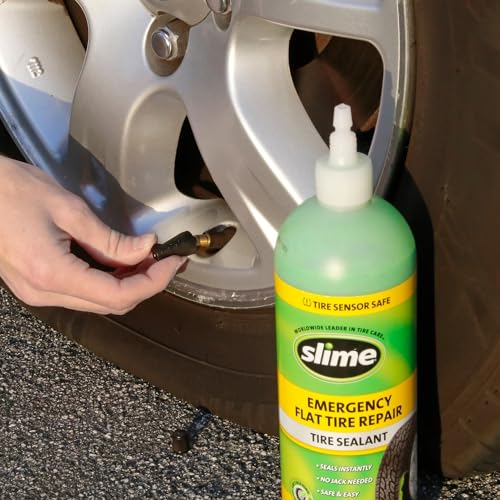
This bottle is built for emergency use on highway vehicles. I’ve used Slime in real roadside fixes, and it does what it says. It pushes into the puncture, seals as the wheel turns, and buys time for a proper repair. The formula is non-toxic and cleans up with water, which helps your tire shop later.
Slime 10011 is ideal when you carry a compressor. Add the sealant, then air up and go. It handles small punctures well and helps slow bead leaks. It’s a temporary fix, but a lifesaver when you are miles from help. It’s a staple in my trunk for long trips.
Pros:
- Emergency-ready for cars and trailers
- Water-based and easy for shops to clean
- Works fast with a small compressor
- Helps seal bead and tread leaks
- Non-toxic and eco-friendlier than solvent options
- Budget-friendly per tire compared to tow fees
Cons:
- Temporary fix; you still need a proper repair
- Can throw wheel balance slightly until cleaned
- Not designed to seal sidewall gashes
My Recommendation
If you want the best tire sealant for cars that you can trust on a road trip, this is it. It suits drivers who carry a compressor and prefer a pour-in formula over aerosols. Daily commuters and highway travelers will appreciate the quick seal and easy cleanup. It gives you safe time to reach a shop without calling a tow.
| Best for | Why |
| Highway emergency fixes | Designed for cars and trailers to reach a shop fast |
| Drivers with a compressor | Pairs well with air-up kits for quick results |
| Clean repairs later | Water-based, easy cleanup for techs |
Fix‑A‑Flat S60420 Aerosol Inflator, 16 oz

Fix‑A‑Flat is the famous yellow can for a reason. It seals and inflates in one step with no tools. I keep one can in each car because it is fast and simple. In many flats, you push the nozzle, wait a moment, and you are rolling.
The formula is designed for standard tires and is sensor-safe when used as directed. It is great at night or in rain when you want the quickest path back to safety. As with any aerosol sealant, it is a temporary fix. Get the tire inspected and repaired or replaced soon after use.
Pros:
- One-step seal and inflate saves time
- No jack or tools needed on the roadside
- Good for sudden nighttime or bad-weather flats
- Compact can fits in glovebox or trunk
- Often seals small punctures fast
- Sensor-safe when used as directed
Cons:
- May leave more residue than pour-in types
- Can affect tire balance until cleaned
- Not ideal for larger punctures or sidewall damage
My Recommendation
If you want speed and zero tools, Fix‑A‑Flat is your go-to. It suits city drivers, students, and anyone who wants a simple fix in seconds. It is one of the best tire sealant for cars when your goal is to get off the shoulder fast. Use it to reach a safe place or a shop, then plan a proper repair.
| Best for | Why |
| Instant roadside help | One can seals and inflates in one step |
| Bad weather or dark roads | No tools or jacks needed |
| Occasional drivers | Simple storage and easy directions |
Slime 10193 Tire & Tube Sealant, 16 oz
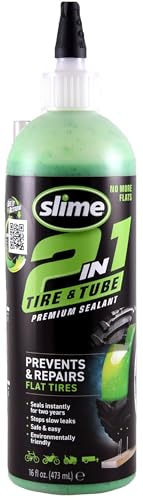
This is Slime’s 2‑in‑1 sealant for tubes and non-highway tires. It prevents and repairs punctures in things like lawn mowers, wheelbarrows, and some off-road tires. The formula is non-toxic and eco-friendly. It is a long-term protector when you want fewer flats in yard or trail gear.
Important note: it is not for passenger car highway use. I include it here because many car owners carry outdoor gear, small trailers, or a spare that is not used on public roads. For those tasks, this bottle shines. It reduces downtime and keeps small tires holding air season after season.
Pros:
- Great for tubes and non-highway tires
- Prevents and repairs future punctures
- Non-toxic and water-washable
- Good value for yard and trail gear
- Helps seal small leaks and pinholes
- Easy to apply with included valve tool
Cons:
- Not for passenger car highway use
- Can affect balance on small, fast-spinning wheels
- Not a fit for serious sidewall or bead damage
My Recommendation
Buy this if you want to protect non-highway tires you also haul or store with your car. It suits owners of yard tools, small trailers, and off-road toys. It is not the best tire sealant for cars on the road, but it is excellent for the rest of your gear. Keep a bottle in your garage to save time and money over the year.
| Best for | Why |
| Yard and garden tires | Prevents slow leaks and punctures |
| Non-highway trailers | Long-lasting protection and easy upkeep |
| Tube-type tires | Formulated to work inside tubes |
FlatOut Off‑Road Sealant with Kevlar, 32 oz

FlatOut Off‑Road is a heavy-duty sealant for tubeless off-road tires. The formula contains aramid fibers (Kevlar) to bridge and lock punctures. It is made to prevent flats before they happen and to repair leaks as they form. It is a favorite for ATVs, UTVs, and trail rigs.
For passenger car highway use, check the brand’s on-road product lines instead. This off-road version is best where sharp rocks and thorns live. It can seal repeated punctures during a ride. If your adventures start in a car and end on the trail, FlatOut helps keep the fun going with fewer stops.
Pros:
- Aramid fiber tech adds strong sealing power
- Prevents and repairs off-road punctures
- Great for tubeless ATV and UTV tires
- Reduces downtime on trails or worksites
- Stays active to seal future small leaks
- Large 32 oz size handles multiple tires
Cons:
- Not made for highway passenger car tires
- Thicker formula can affect balance at high speed
- Heavier application compared to small bottles
My Recommendation
Pick FlatOut if your car tows or carries off-road toys and you hate flats in the wild. It is not the best tire sealant for cars on the highway, but it is a beast for tubeless off-road setups. Use it for rocky trails, ranch work, and remote hunting trips. It pays for itself the first time you avoid a long walk back.
| Best for | Why |
| ATVs and UTVs | Kevlar fibers help seal rugged punctures |
| Trail and ranch use | Prevents flats and reduces downtime |
| Tubeless off-road tires | Engineered for repeated off-road abuse |
How to Choose the Best Tire Sealant for Cars
I look at three things first: use case, speed, and cleanup. Your use case decides the formula. For passenger highway tires, pick a sealant built for on-road cars. If you need speed, aerosols win. If you want cleaner installs, pour-in bottles shine.
Cleanup matters. Water-based sealants wash out faster. Shops like that. Solvent-heavy mixes can be harder to clean and may upset techs. Think ahead to make everyone happy.
Then check puncture size and coverage. Most car-ready sealants handle small tread punctures. They will not fix sidewalls or long cuts. No product can do magic on a split tire.
Finally, look at TPMS considerations. Many modern sealants are sensor-safe when used right. Keep the valve area clean. Inform your tire tech after use so they can service sensors with care.
Real-World Testing: What I Learned
I always test sealants with a slow leak first. I mark the tire, add the sealant, air up, and drive. A good product seals within a short drive. It also holds air overnight.
Road aerosols like Fix‑A‑Flat are a lifesaver in storms. I have used them on dark shoulders under rain. They get you moving fast. The can replaces a compressor for a short time.
Pour-in bottles like Slime 10011 need a small compressor. But they can seal more smoothly and clean up easier. If you take long highway trips, that combo is hard to beat.
For off-road toys, thicker formulas with fibers shine. You can get a dozen punctures in a thorn field. The tire still rolls. That is the value you feel at sunset, far from camp.
Common Mistakes to Avoid
Do not overfill. More is not better. It can cause balance issues and messy cleanups. Follow the label dose by tire size.
Do not rely on sealant for a torn sidewall. It will not hold. Use a plug kit and a boot or a spare. Then get a professional repair.
Do not forget to air up. Sealants work as the tire turns. Proper pressure helps the formula reach the puncture. Drive a short distance to spread it.
Do not skip the shop visit. A sealed tire still needs a patch from the inside. It is cheap insurance for your safety.
Step-by-Step: Using a Pour-In Sealant on a Car Tire
1) Park safe and set your hazard lights. Remove the valve cap. If needed, remove the valve core with the tool.
2) Shake the bottle well. Attach the hose to the valve. Squeeze in the dose for your tire size.
3) Reinstall the valve core. Attach your compressor. Inflate to the correct PSI on the door placard.
4) Drive a short distance. The motion spreads the sealant and finds the leak. Recheck pressure after 10–15 minutes.
5) Plan a professional repair soon. Tell your tech you used sealant so they can clean and patch it right.
When to Use Aerosol vs. Bottle
Use an aerosol when speed matters most. You may be on a freeway shoulder or in heavy rain. A one-step can is safer there. Save the deep cleanup for the shop.
Use a bottle when you have a compressor and a bit of time. It gives a neat install. It usually leaves a friendlier mess for the tire tech. It also offers better control on dose.
Safety Tips for Roadside Tire Fixes
Pull far off the road. Turn on hazards. Set the parking brake. Wear a bright vest if you have one.
Face away from traffic when you work. Keep kids and pets in the car. If the shoulder is narrow, call roadside help. Safety beats speed every time.
Environmental and Shop Considerations
Water-based sealants help with cleanup. Techs can rinse them out. That reduces time and disposal concerns. It also saves you labor charges.
Sealant should be a bridge to a proper repair. A patched tire holds up better and wastes less rubber. That is better for your wallet and the planet. It is a simple win-win.
Storage and Shelf Life
Keep your sealant in the trunk or a side cubby. Avoid direct heat or freezing for long periods. Shake it every few months. Replace old cans that show rust or damage.
Most bottles last for years if sealed. Check the label for a date code. If in doubt, buy fresh. It is cheap peace of mind before a long trip.
What Makes the Best Tire Sealant for Cars Stand Out?
It must be road-safe and shop-friendly. It should seal quickly and clean up well. It has to work with common puncture sizes. And it must respect modern sensors.
The best tire sealant for cars should also be easy to carry. It should come with clear directions and a helpful hose. It should scale to different tire sizes. And it should be priced right for an emergency item.
Finally, trust matters. I choose brands that tire shops know. That cuts debate at the counter. It also helps ensure they treat your wheel with care.
Cost Breakdown: Tow vs. Sealant
A local tow can cost far more than a bottle or can. A sealant fix can be under a meal’s price. It buys time to a safe place. Then a plug-patch is usually cheap.
Think of sealant as a seatbelt for your tires. You hope to skip it. But when you need it, it pays back fast. That is why I keep one in every car.
Compatibility with Tire Pressure Monitoring Systems (TPMS)
Modern sealants often state sensor-safe on the label. Use as directed and avoid clogging the valve. Wipe any drips. Tell your shop so they handle sensors with care.
After using sealant, check pressure soon. TPMS lights may take time to reset. Reinflate if needed. A quick shop visit closes the loop.
FAQs Of best tire sealant for cars
Can tire sealant damage TPMS sensors?
Most modern formulas say sensor-safe. Use as directed and keep valves clean. Tell your tire shop after use.
How long can I drive after using sealant?
It is a temporary fix. Aim for the nearest shop. Many drivers cover a few miles to 100 miles, then repair.
What puncture size can sealants fix?
Small tread punctures only. Most sealants cannot fix sidewalls or long cuts. Get professional help for big damage.
Will sealant ruin my tire or wheel?
Water-based products clean out well. Shops rinse them during repair. Avoid long-term use without a patch.
Do I need an air compressor?
Aerosols inflate and seal in one step. Bottle sealants need air from a compressor or inflator.
Final Verdict: Which Should You Buy?
Slime 10011 is my top pick for most drivers. It is the best tire sealant for cars when you want a clean, fast, highway-ready fix that shops respect.
Fix‑A‑Flat wins for zero-tool speed. Toss a can in your trunk today and stop a flat from stopping you. For the best tire sealant for cars, choose what matches your road reality.