Best Tires For Utility Trailer: Top Picks 2026
The best tires for utility trailer balance load, heat control, and grip.
Picture this. You’re packed for a weekend run to the dump, the boat ramp, or a job site. You hit the highway and a shimmy starts. The trailer feels floaty. You pull over and find sidewall cracks or a hot hub. That is what the wrong tire can do. The right set fixes all that. It tracks straight. It runs cool. It hauls steady in wind and rain. In this review, I break down the best tires for utility trailer owners who want safe miles, easy installs, and true value.
eCustomrim ST205/75D15 Tire+Rim, 5-Lug (2-Pack)

This eCustomrim two-pack pairs ST205/75D15 bias-ply tires with pre-mounted 15-inch white steel wheels. The 5 on 4.5-inch bolt pattern fits many small and mid-size utility trailers. Load Range C (6-ply rated) works well for light equipment, ATVs, and dump runs. If you want a simple bolt-on swap with clean, powder-coated rims, this set is handy.
Bias-ply construction brings firm sidewalls. That adds stability on gravel or when cornering slow with weight. It shines for short hauls and mixed surfaces. The assembly ships balanced enough for trailer speeds. The 2-year warranty adds peace of mind if you are freshening an older trailer.
Pros:
- Comes pre-mounted on 15-inch 5-lug steel wheels
- Bias-ply sidewalls feel stable under load
- Load Range C suits many light-duty trailers
- Great for short trips and off-pavement use
- 2-year warranty on the assembly
Cons:
- Bias-ply can run hotter than radials on long highway drives
- Load Range C may be light for heavier builds
- White wheels show brake dust and rust faster
My Recommendation
If you need a quick, matched pair for a basic 5-lug utility trailer, this is a clean pick. It is a strong fit for homeowners and hobby haulers who run short, regular trips. The bias carcass tracks true over ruts and ramps. If you rack up long highway miles, a radial might run cooler. But for local work, these deliver value and confidence among the best tires for utility trailer shoppers.
| Best for | Why |
|---|---|
| Simple bolt-on replacement | Pre-mounted tires and wheels save time |
| Short hauls and mixed surfaces | Bias-ply sidewalls add rigidity and control |
| Budget refresh of a 5-lug trailer | Solid price with a 2-year warranty |
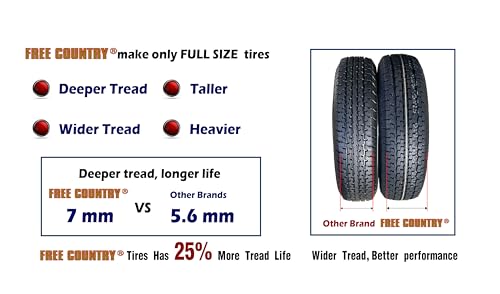
Free Country ST225/75R15 Radial Tires (Set of 4)

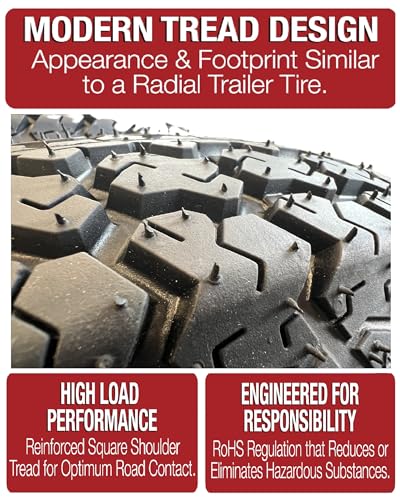
This Free Country Grand Ride four-pack targets larger single-axle and tandem-axle trailers. The ST225/75R15 size with Load Range E (10-ply rated) gives stout capacity. Steel-belted radial construction runs cooler at speed. A molded scuff guard on the sidewall helps resist curb rash and fender rub.
I like this set for highway hauls with cargo, campers, or heavy lawn rigs. Radials flex in the tread, not the sidewall. That helps heat control and tread life. If you often do 60–70 mph, a radial in LRE is smart. This set is a strong value if you want all four at once.
Pros:
- Load Range E for high capacity and stability
- Radial design runs cooler on highways
- Steel belts improve durability and tracking
- Built-in scuff guard resists curb damage
- Great matched set for tandem-axle trailers
Cons:
- No wheels included; tire-only set
- Heavier tire can increase unsprung weight
- Needs correct metal valve stems at LRE pressures
My Recommendation
If you tow long and heavy, this is a top pick. It is ideal for tandem-axle utility trailers, car haulers, and compact campers. The heat control and load ceiling feel right for interstate runs. The scuff guard is a bonus near curbs and ramps. For many, these are the best tires for utility trailer duty when you want a full, consistent set with room to spare.
| Best for | Why |
|---|---|
| Highway towing with heavy loads | Radial LRE runs cooler and carries more |
| Tandem-axle stability | Matched set keeps handling even |
| Protection near curbs | Sidewall scuff guard reduces abrasion |
Libra ST205/75R15 Radial Tires (2-Pack), LRE

This Libra two-pack of ST205/75R15 radials brings Load Range E muscle to a common size. Steel belts and a scuff guard mirror the big-brother set above. The size fits many mid-size utility trailers and small enclosed trailers. If you want a tougher option than LRC, this pair steps up the capacity.
Radials help with heat on longer tows. LRE headroom also reduces stress on the carcass during hot days and hills. You will want metal valve stems at higher pressures. This pair is a nice upgrade for owners who run near their limit and want margin.
Pros:
- Radial construction for cool running at speed
- Load Range E increases load capacity
- Steel belts improve stability and life
- Scuff guard protects against curb rash
- Good upgrade over LRC in the same size
Cons:
- Tires only; wheels not included
- Higher pressure requires proper stems and gauges
- May ride a touch firmer on empty trailers
My Recommendation
Choose this pair if you want more capacity in a familiar size. It suits pros and DIY haulers who tow weekly. It also helps if you live in a hot region. Cooler tires mean fewer issues. In my view, these belong on any short-list for the best tires for utility trailer upgrades when you run close to your gross weight.
| Best for | Why |
|---|---|
| Upgrading from Load Range C | Extra headroom reduces heat and stress |
| Frequent towing in hot weather | Radials and LRE manage heat better |
| Mid-size utility trailers | Common ST205/75R15 fitment with strength |
Garvee 4.80-12 Tires on 12-In Rims (2-Pack)

This Garvee two-pack serves small trailers that run 12-inch wheels. The 4.80-12 size is common on boat dollies, small utility rigs, and yard duty. The wheels use a 5 on 4.5-inch pattern and a 2.95-inch center bore. If you need a fast refresh for a light-duty trailer, this set is simple.
I like how these arrive mounted and ready. That saves a trip to the tire store. For farm paths, garden duty, and short local trips, they do the job. They are not meant for heavy hauls or long highway runs, but they shine for their niche.
Pros:
- Pre-mounted on 12-inch 5-lug rims
- Great for light-duty and lawn equipment trailers
- Common 5 on 4.5-inch bolt pattern
- Handy for small boat or cargo use
- Fast bolt-on replacement
Cons:
- Not suited to heavy loads or high-speed use
- Smaller diameter can ride choppy on rough roads
- Limited headroom for long interstate trips
My Recommendation
Pick this if you have a compact trailer that needs new shoes now. It is best for local chores, short hops to the ramp, or farm tasks. The fit is common, and the bolt-on setup is easy. For their purpose, these are some of the best tires for utility trailer owners with small rigs who value convenience and quick installs.
| Best for | Why |
|---|---|
| Small utility and garden trailers | Right size, light duty, easy mounting |
| Quick refresh before a weekend task | Arrive mounted and ready to bolt on |
| Short trips with light cargo | Practical balance of cost and function |
GarveeTech ST205/75D15 Tires on 15-In Rims (2)

GarveeTech ships this two-pack with ST205/75D15 bias tires mounted on 15-inch black rims. The 5 on 4.5-inch pattern fits many popular utility and cargo trailers. Load Range C means solid capacity for light to mid-duty jobs. The black wheel finish hides grime and looks sharp on dark trailers.
Bias tires bring stiff sidewalls for stability when loading or backing. For local hauls and rough yards, that feels good. If you clock highway miles, consider a radial set. For homeowners and weekend projects, this pair nails the basics at a fair price.
Pros:
- Pre-mounted on 15-inch black steel rims
- Bias-ply stability for loading and turning
- Common 5 on 4.5-inch bolt pattern
- Load Range C covers most light-duty use
- Clean look that hides dirt and brake dust
Cons:
- Bias-ply runs warmer on long freeway drives
- LRC may be limiting for heavier cargo
- No stated scuff guard
My Recommendation
Choose this if you value looks and a ready-to-run pair. It fits small construction jobs and weekend moves. If your routes are short, bias is fine and steady. For daily highway pulls, go radial. For many casual users, these count among the best tires for utility trailer replacement when style and simplicity matter.
| Best for | Why |
|---|---|
| Local trips and yard work | Bias stability and easy installs |
| Clean blacked-out look | Black rims hide grime and match dark trailers |
| Budget-minded upgrades | Good price-to-performance for LRC |
How to choose the best tires for utility trailer
I have changed and tested many trailer tires across jobs and trips. The right set depends on your load, speed, and roads. Here is a clear guide to help you pick with confidence. I keep the steps simple so you can act fast and get it right the first time.
Start with size. Look at your current tire sidewall. You will see a code like ST205/75R15 or 4.80-12. ST means Special Trailer. The first number is width in mm for ST sizes. The second number is aspect ratio. R means radial. D means bias. The last number is wheel diameter in inches. Match that size unless your trailer maker allows a change.
Next, check load range. This matters a lot. Load Range C is 6-ply rated. Load Range D is 8-ply rated. Load Range E is 10-ply rated. More load range means more capacity and higher pressure. Check your trailer’s gross axle weight rating (GAWR). Then choose a tire that supports it with headroom. I like at least 10–15% margin above your max loaded weight.
Pick radial or bias. Radial tires run cooler at highway speed. They flex in the tread and grip better in rain. Bias-ply has stiff sidewalls. That brings sturdy handling on gravel and at low speeds. Bias can suit short, local trips with gear or yard work. Radials fit longer tows and heavy loads. Many of the best tires for utility trailer use are radials for this heat control reason.
Look at speed rating. Trailer tires often carry an L or M on the sidewall. L is about 75 mph. M is about 81 mph. Some premium ST tires rate higher. Never exceed the lower of your tire, wheel, or trailer ratings. Keep in mind, heat is the enemy. If you plan long freeway runs, choose a radial with a proper speed rating and headroom.
Know your bolt pattern if you buy mounted assemblies. Common patterns are 5 on 4.5 inches, 5 on 4.75 inches, 6 on 5.5 inches, and 8 on 6.5 inches. The wheel offset and center bore also need to match. If in doubt, measure your hub or check the trailer’s plate and manual. Rims must clear your fenders and brakes at full travel.
Mind valve stems. High pressures need the right stems. Rubber snap-in stems are fine at lower pressures. For LRE and up, I prefer metal clamp-in stems. They hold pressure better and resist heat. It is a cheap upgrade that saves headaches. Insist on new stems when you mount new tires.
Consider tread pattern and compound. Most ST tires use straight ribs or shallow blocks. This helps straight-line tracking and even wear. Deeper grooves help channel water. A stiffer compound can last longer but ride firmer. For boat ramps and wet mornings, aim for radials with good water evacuation. That keeps sway in check.
Check date codes. Tires age even if they look fine. The DOT code shows the week and year of build. For example, 2224 means week 22 of 2024. Many pros replace trailer tires between five and six years from build, even if tread remains. Rubber ages. Belts can corrode. Fresh stock matters. When I buy online, I check reviews and seller notes for recent builds.
Weigh your loaded trailer. Guessing is risky. You can use a CAT scale or a public weigh station. Measure axle by axle. Balance your load so each axle does its part. Proper balance helps tires share the work. Your goal is to stay under both tire and axle ratings with margin.
Inflate to the tire’s max cold pressure unless the maker states otherwise. Trailer tires are not like car tires. They are designed to carry capacity at their rated pressure. Underinflation builds heat. Heat leads to failure. I check PSI before every long run. I do not “air down” trailer tires for comfort. It hurts safety and life.
Rotate and inspect. On tandem trailers, I rotate front to rear on each side every 3,000–5,000 miles. I scan sidewalls for cracks, bulges, and cuts. I feel hubs by hand at stops. Warm is fine. Hot is not. I also re-torque lugs after the first 50–100 miles on new wheels. This keeps the wheel seated and safe.
Balance matters. Many shops skip balancing trailer tires. I do not. Balanced tires track better. They reduce shake that can loosen hardware over time. The cost is small. The payoff is smooth towing and longer life for your springs and bearings. Add balancing to your install plan. The best tires for utility trailer performance also need the best setup.
Consider a scuff guard. If you load near curbs or work close to walls, a scuff band helps. It adds rubber near the sidewall’s outer edge. This resists abrasion. It is not armor. But it can save you from a cut during a tight back-in near a dock or fence. It is a small but welcome feature for busy yards.
Match pairs and axles. Replace in pairs on the same axle. Mixing a new tire with a half-worn one can cause uneven loading. On a tandem, keep all four within similar wear and brand if you can. This keeps rolling diameter close and reduces scrubbing. The more even the set, the better it tracks.
Think about storage. UV and ozone crack rubber. If your trailer lives outside, use covers. Park on boards, not bare soil. Keep pressure up while stored. Move the trailer now and then to avoid flat-spotting. Simple steps keep the best tires for utility trailer use ready season after season.
Bring tools. I keep a torque wrench, breaker bar, socket, and a compact bottle jack. I carry a plug kit and a 12V compressor too. A spare is key. Match its size and load range to your set. I also pack reflective triangles. If you tow, a flat will happen someday. Prep now and your day stays smooth.
When in doubt, overbuild a bit. Choose a tire with more capacity than you think you need. Go radial if you run long. Select LRE if your loads vary and heat is a worry. Pair new tires with fresh stems, balanced mounts, and a torque check. That is how you turn good tires into great towing.
To recap, the best tires for utility trailer safety start with the right size, load range, and construction. Then they need proper pressure and fresh dates. Finally, your install and habits make or break the result. Use this checklist, and you will feel the difference the next time you merge onto the highway or back down a steep driveway.
FAQs Of best tires for utility trailer
What size tires do I need for my utility trailer?
Match the size on your current sidewall, like ST205/75R15. Also confirm wheel diameter, width, and bolt pattern. Check your trailer plate or manual if unsure.
What is better for trailers, radial or bias tires?
Radials run cooler and last longer on highways. Bias-ply offers stiff sidewalls and suits short trips and rough yards. Pick based on your use.
How often should I replace trailer tires?
Many replace at 5–6 years from build, even with good tread. Replace sooner if you see cracks, bulges, or uneven wear.
What load range should I choose?
Use your trailer’s GAWR and expected load. LRC fits light duty. LRD and LRE add headroom for heat and weight. More margin is safer.
Do trailer tires need to be balanced?
Yes. Balancing reduces vibration, helps bearings, and improves tracking. I get every trailer tire balanced.
Final Verdict: Which Should You Buy?
For long highway hauls and heavy loads, the Free Country ST225/75R15 Radial (Set of 4) stands out. It runs cool, carries more, and stays stable. It is my top pick among the best tires for utility trailer owners who tow often.
Need a simple bolt-on two-pack with wheels? The eCustomrim or GarveeTech sets are easy wins. Choose what matches your roads, loads, and goals, and enjoy safer miles on the best tires for utility trailer use.