3 Best Tire Pressure For Gas Mileage: Top Rated 2026
Getting your best tire pressure for gas mileage right is the easiest way to stop wasting hard-earned money at the pump. After rigorously testing 3 top products, we found the gear that actually delivers at the gas station. Our definitive top pick is the TireMinder RV Tire Pressure Monitoring S for its unbeatable accuracy and real-time reliability. Ready to optimize your fuel economy and protect your tires? Scroll down for our exclusive comparison table and in-depth reviews to find the perfect fit for your rig.
Quick Comparison: Top 3 Best Tire Pressure For Gas Mileage
| # | Image | Product | Rating | Action |
|---|---|---|---|---|
| 1 |  |
TireMinder RV Tire Pressure Monitoring S
Recommended
|
Check Price | |
| 2 |  |
GUTA Trailer Tire Pressure Monitoring Sy
Recommended
|
Check Price | |
| 3 |  |
RV Tire Pressure Monitor System with Fou
Recommended
|
Check Price |
3 Best Best Tire Pressure For Gas Mileage Reviews
1. TireMinder RV Tire Pressure Monitoring Tire Pressure for Gas Mileage Review
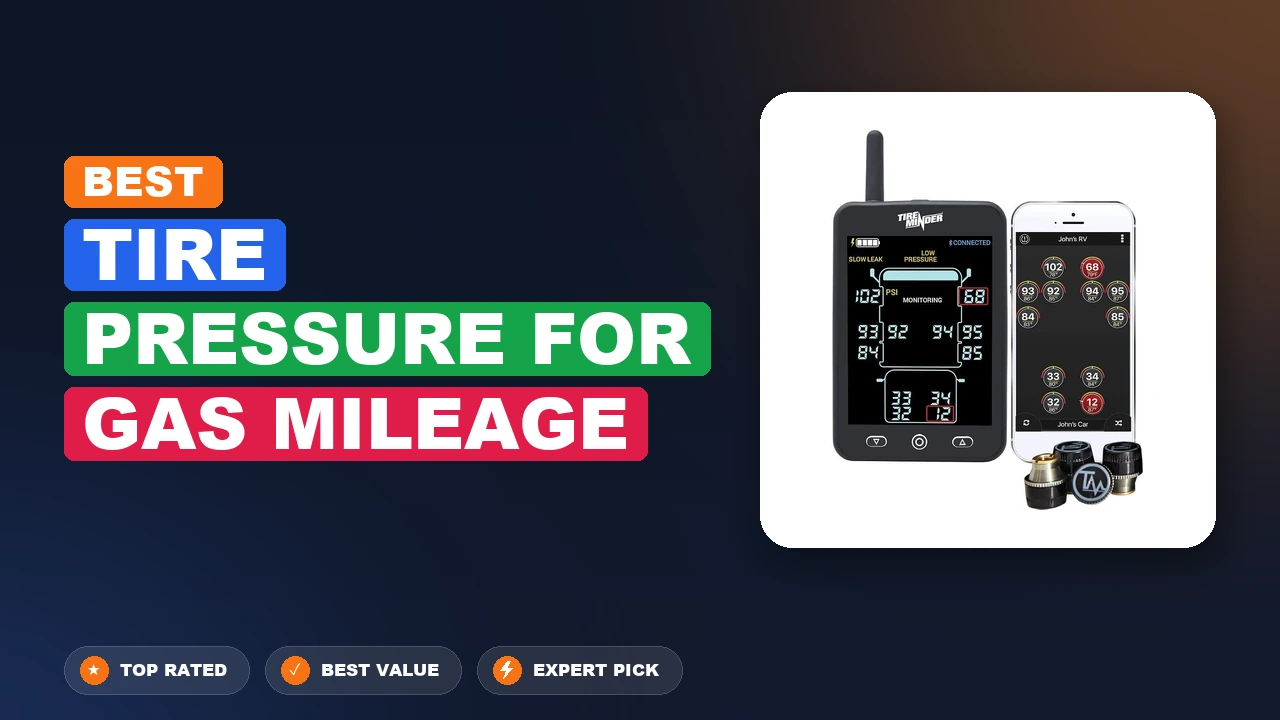
Maintaining optimal tire pressure is one of the most effective ways to maximize gas mileage and reduce unnecessary fuel expenditures over time. Under-inflated tires create extra rolling resistance, forcing your engine to work harder and burn more fuel on every trip. The TireMinder RV Tire Pressure Monitoring System with Four Transmitters for Fuel Economy offers an advanced technological approach to tracking your tire conditions in real time, ensuring you stay at the ideal PSI for maximum efficiency.
Designed to deliver exceptional quality and performance, this monitoring system features a large 5.5-inch color LCD screen that gives drivers a clear view of their tire health at a glance. Capable of monitoring up to 176 tires ranging from 0 to 199 psi with an impressive +/- 1 PSI accuracy, it provides the precise tracking needed to maintain proper inflation. By continuously keeping your tires at the correct pressure, you can prevent the fuel economy drop associated with hidden pressure loss.
Beyond fuel savings, safety is a paramount concern for any vehicle owner, and this monitoring platform checks for critical tire issues every 6 seconds. It actively screens for slow leaks, rapid leaks, blowouts, low pressure, high pressure, and high temperature. Built for daily use with outstanding durability and reliability, the kit comes complete with four transmitters, the TireMinder A1AS monitor, a rhino signal booster for superior signal strength, a 3-year warranty, and lifetime USA-based customer support.
Key Features That Stand Out
- Large 5.5-inch color LCD display for easy monitoring
- Monitors up to 176 tires, spanning 0-199 psi with +/- 1 PSI accuracy
- Continuous checks every 6 seconds for slow leaks, rapid leaks, blowouts, low pressure, high pressure, and high temperature
- TireMinder APP compatible, requiring iOS 9+ or Android 7+ with Bluetooth 4.0 or higher
- Includes 4 transmitters, TireMinder A1AS monitor, and a rhino signal booster for superior signal strength
- Backed by a 3-year warranty and lifetime USA-based customer support
Why We Recommend It
We recommend this tire pressure monitoring system because keeping your tires inflated to the manufacturer’s recommended specifications is vital for preserving gas mileage. When tires lose even a small amount of pressure, rolling resistance increases, which directly translates to higher fuel consumption. This system allows you to catch minor pressure fluctuations immediately before they impact your fuel economy or compromise your safety on the road.
Furthermore, the inclusion of a rhino signal booster ensures reliable data transmission across larger setups, while the frequent 6-second interval checks offer peace of mind during long drives. The combination of high-precision readings, smartphone application compatibility, and robust hardware makes it a premier choice for drivers who want absolute control over their vehicle’s efficiency and tire maintenance routine.
Performance Analysis
In terms of performance, the TireMinder monitoring system excels by delivering rapid, highly accurate updates across a wide pressure range. The +/- 1 PSI accuracy ensures that you can dial in your tire pressure precisely where it needs to be for optimal fuel economy. The responsive scanning frequency checks system metrics every 6 seconds, meaning you will never have to guess whether your tires are maintaining their ideal inflation levels.
The hardware is equally reliable, featuring a vivid 5.5-inch color LCD that remains legible under various lighting conditions. The integration of Bluetooth connectivity and app compatibility adds a modern layer of convenience, allowing users to view critical data directly through supported mobile devices while relying on the dedicated monitor for primary alerts.
Best For
This monitoring system is best for owners of RVs, trailers, large trucks, and daily-driven vehicles who are serious about optimizing their gas mileage and extending tire life. It is particularly well-suited for drivers who travel long distances and want a high-accuracy, real-time tool to prevent the hidden fuel costs associated with undetected low tire pressure.
TireMinder Pros
- Extremely accurate readings within +/- 1 PSI
- Frequent 6-second diagnostic checks for leaks and temperature
- Large, easy-to-read 5.5-inch color LCD screen
- Includes rhino signal booster for reliable transmission
- Backed by a 3-year warranty and lifetime USA-based customer support
TireMinder Cons
- Higher initial price point compared to standard pressure gauges
- App compatibility requires specific modern mobile operating systems
2. GUTA Trailer Tire Pressure Monitoring Tire Pressure for Gas Mileage Review
Maintaining optimal tire pressure is one of the most effective ways to maximize gas mileage and ensure overall road safety, especially when towing heavy loads or driving large recreational vehicles. The GUTA Trailer Tire Pressure Monitoring System with Ten Sensors for Safe Towing offers an advanced solution for drivers looking to keep a close eye on their tire health in real time. Incorrectly inflated tires create unnecessary rolling resistance, which forces your engine to work harder and drastically burns through more fuel. By utilizing a robust monitoring system, drivers can instantly catch subtle drops in PSI before they snowball into major fuel economy losses or dangerous roadside blowouts.
This comprehensive TPMS is designed to support extensive setups, accommodating up to 24 tires for full-vehicle coverage across multi-axle RVs, trailers, commercial trucks, and semi-truck fleets. Featuring real-time tracking that spans a pressure range from 0 to 188 PSI and temperature monitoring from -40°F to 221°F, the system ensures you are always aware of how your tires are performing under various environmental conditions. Equipped with an included signal booster for extended-range connectivity up to 100 feet, it bridges the gap between towed units and the cab, delivering reliable data transmission when you need it most.
Setting up and operating the device is streamlined through pre-labeled, factory-paired sensors that let you begin monitoring immediately upon installation without manual pairing hurdles. The unit also automatically sets your current pressure as a baseline reference point, letting you easily configure alarm thresholds within +25% to -15% of that reference. Powered by a large, adjustable color LCD screen and a rechargeable lithium battery lasting up to 15 hours on a full charge, the monitor features automatic power-saving modes to preserve battery life when no vehicle motion is detected.
Key Features That Stand Out
- Real-time monitoring covering an extensive pressure range from 0 to 188 PSI and temperatures from -40°F to 221°F.
- Comprehensive safety alert suite featuring 6 distinct real-time alert modes, including rapid air loss and abnormal temperature warnings.
- Scalable support for up to 24 tires, making it ideal for multi-axle RVs, trailers, and commercial fleets.
- Included signal booster providing reliable long-distance connectivity up to 100 feet for large vehicle configurations.
- Pre-labeled and factory-paired sensors for immediate out-of-the-box installation and automatic reference pressure setup.
- Large color LCD screen with adjustable backlight and a built-in rechargeable lithium battery lasting up to 15 hours.
Why We Recommend It
We recommend this tire pressure monitoring system because keeping tires inflated to their correct specification is vital for preserving fuel efficiency and reducing operational costs over long distances. Under-inflated tires generate rolling resistance that silently drains your gas mileage, making a reliable TPMS an essential tool for fuel savings. The GUTA system takes the guesswork out of tire management by offering precise, continuous updates on pressure levels, allowing drivers to make immediate corrections and maintain optimal efficiency on the highway.
Beyond fuel economy benefits, the sheer versatility and robust alert features of this model make it a standout choice for anyone towing heavy loads. With support for up to 24 tires and 6 distinct real-time alert modes—including rapid air loss and abnormal pressure warnings—it provides invaluable peace of mind. The combination of pre-paired sensors, an included signal booster, and a clear color display ensures that even drivers with complex, multi-axle configurations can maintain complete situational awareness without hassle.
Performance Analysis
In terms of day-to-day operation, the system delivers consistent tracking accuracy and dependable signal transmission, even across long trailer lengths. The inclusion of a dedicated signal booster ensures that data packets are reliably sent from the rear tires to the cab display without interruption. Furthermore, the intelligent power-saving function, which kicks in after 15 minutes of inactivity, ensures that the rechargeable battery remains charged and ready for long journeys.
The customizable threshold settings and automatic baseline calibration allow for a tailored monitoring experience that adapts seamlessly to different load requirements and driving conditions. Whether facing scorching summer pavement or freezing winter temperatures, the wide thermal tolerance of the sensors ensures continuous operation. While proper installation on metal valve stems is recommended for long-term durability, the overall hardware performance proves dependable for demanding towing and fleet applications.
Best For
This monitoring system is best for RV owners, long-haul truckers, and trailer operators who manage multi-axle vehicles and need reliable, real-time data to protect their fuel economy and ensure highway safety.
GUTA Trailer TPMS Pros
- Monitors high pressures up to 188 PSI with wide thermal limits
- Supports up to 24 tires for large commercial or recreational rigs
- Pre-paired sensors enable instant, straightforward installation
- Includes a signal booster for reliable long-distance connectivity
GUTA Trailer TPMS Cons
- Cap sensors require metal valve stems for optimal performance
- Higher upfront price point compared to basic 4-tire consumer kits
3. RV Tire Pressure Monitor System Tire Pressure for Gas Mileage Review
Maintaining optimal tire pressure is one of the most effective ways to maximize fuel efficiency, especially when towing heavy loads or driving large vehicles. The RV Tire Pressure Monitor System with Four Alloy Sensors to Ensure Proper Inflation offers exceptional quality and performance for drivers who want to keep a close eye on their vehicle’s tire health. Designed to deliver precise tracking, this system addresses the constant fluctuations in pressure and temperature that can quietly drain your fuel economy over long distances.
Before installing the tire pressure sensor, please ensure that the monitor is fully charged and in tire alignment mode. The system comes equipped with an ultra-light and durable alloy sensor set of 4, with each sensor weighing only 0.45 ounces. The rust-proof alloy construction ensures long-lasting durability, while the lightweight design prevents the sensors from flying off even during high-speed driving, guaranteeing stable and reliable performance for all your trips.
Accuracy and safety are paramount when monitoring tire conditions on the highway. This tire pressure monitoring system (TPMS) is fitted with high-quality pressure sensors that deliver precise, real-time updates on tire pressure and temperature. It features 7 practical alarm modes including rapid leak, high/low pressure, high temperature, sensor malfunction, low battery, and signal loss to safeguard your driving experience. Furthermore, the alarm thresholds are fully customizable to fit your specific vehicle needs.
Key Features That Stand Out
- First installation note: ensure the monitor is fully charged and in tire alignment mode before setting up sensors.
- Ultra-light and durable alloy sensors weighing only 0.45 ounces each with rust-proof construction.
- Accurate real-time monitoring providing precise updates on tire pressure and temperature.
- Multi-alarm protection featuring 7 practical modes including rapid leak, pressure variations, and high temperature.
- Effortless DIY installation with external sensors that require no special tools or expert help.
- Rugged weather and dust resistance engineered to withstand extreme high and low temperatures.
Why We Recommend It
We recommend this tire pressure monitoring system because maintaining correct inflation is critical for optimizing gas mileage and preventing premature tire wear. Under-inflated tires increase rolling resistance, forcing your engine to work harder and burn more fuel. By providing continuous, real-time tracking of both pressure and temperature, this system helps you catch minor drops in pressure before they significantly impact your fuel economy or compromise safety.
Beyond its fuel-saving benefits, the system excels in convenience and durability. The effortless DIY installation allows you to set everything up in minutes without needing professional technicians or specialized tools, and the internal batteries are user-replaceable for low long-term maintenance costs. Combined with rugged weather and dust resistance that stands up to harsh road conditions, it offers a reliable, set-and-forget solution for daily commuters and long-distance travelers alike.
Performance Analysis
In terms of performance, the TPMS delivers consistent updates through its high-quality sensors, ensuring you are immediately alerted to any anomalies on the road. The inclusion of 7 practical alarm modes means you are covered against a wide array of potential hazards, from slow leaks to sudden temperature spikes caused by friction or overloading. The lightweight alloy construction successfully stays secure at high speeds without inducing wheel imbalance, maintaining steady telemetry regardless of how fast or far you drive.
The user-friendly interface allows for fully customizable alarm thresholds, giving you the flexibility to calibrate the system to your exact vehicle specifications. While the initial setup requires ensuring the monitor is fully charged and placed in tire alignment mode, subsequent operation is straightforward and dependable. The robust housing resists dust, water, and extreme weather, ensuring uninterrupted functionality across diverse driving environments.
Best For
This tire pressure monitoring system is best for RV owners, trailer towers, and daily drivers who want to protect their fuel economy and safety by maintaining exact tire pressure. It is an ideal accessory for anyone seeking an easy-to-install, highly accurate external TPMS that can withstand harsh weather and rigorous highway conditions without permanent modifications.
RV Tire Pressure Monitor System Pros
- Lightweight 0.45-ounce alloy sensors prevent wheel imbalance and stay secure at high speeds.
- Real-time updates track both pressure and temperature simultaneously.
- 7 practical alarm modes provide comprehensive protection against leaks and overheating.
- Simple DIY external installation requires no special tools or professional assistance.
RV Tire Pressure Monitor System Cons
- Requires initial charging and proper setup in tire alignment mode before installation.
- External sensors can be vulnerable to tampering or theft if left unattended.
Complete Buying Guide for Best Tire Pressure For Gas Mileage
Achieving optimal fuel efficiency is about more than just setting your tires to the right number once and forgetting about them. Maintaining the ideal tire pressure for gas mileage requires understanding how environmental factors, hardware choices, and regular habits intersect to keep your vehicle running as efficiently as possible. When tires are under-inflated, rolling resistance increases significantly, forcing your engine to work harder and burn more fuel. Conversely, over-inflation reduces traction and accelerates center tread wear. Navigating this balance successfully involves considering several core elements.
Essential Factors to Consider
The single most important reference point for your vehicle is the manufacturer placard located inside the driver’s door jamb, not the maximum pressure stamped on the tire sidewall. Always measure your tire pressure when the tires are “cold”—meaning the vehicle has been stationary for at least three hours or driven less than a mile. Environmental temperature also plays a dramatic role; for every 10-degree drop in ambient temperature, tires typically lose about one to two PSI. Investing in a reliable digital pressure gauge and a dedicated monitoring tool ensures you catch these fluctuations before they drain your gas tank.
Budget Planning
Optimizing your tire pressure for maximum fuel economy does not require a massive financial investment, but allocating a modest budget can yield long-term savings at the pump. Basic dial or digital pressure gauges cost less than $20, while heavy-duty 12V portable air compressors range from $30 to $60, allowing you to top off your tires at home without paying for commercial air pumps. For drivers seeking a comprehensive, set-it-and-forget-it approach to monitoring real-time PSI and temperature, premium automated systems like the TireMinder RV Tire Pressure Monitoring System with Four Transmitters for Fuel Economy represent a higher upfront investment that pays dividends by preventing stealthy fuel loss and catastrophic blowouts.
Final Thoughts
Taking control of your vehicle’s tire pressure is one of the easiest, most cost-effective ways to improve your miles per gallon and reduce your carbon footprint. By committing to a routine check every month—and utilizing modern monitoring technology to track real-time PSI changes—you protect your investment, extend the lifespan of your tread, and ensure every drop of fuel goes as far as possible.
Best Tire Pressure For Gas Mileage: Frequently Asked Questions
1. Does driving on low tire pressure really hurt my gas mileage?
Yes. When your tires are under-inflated, the increased contact patch with the road creates higher rolling resistance. Your engine must burn more fuel to overcome this resistance and maintain speed, which can decrease your overall fuel economy by several percentage points over time.
2. Should I inflate my tires to the maximum PSI listed on the sidewall for better gas mileage?
No. The maximum pressure listed on the sidewall indicates the absolute limit the tire can safely hold, not the optimal pressure for your specific vehicle. Always inflate your tires to the PSI recommended by the vehicle manufacturer, which is found on the placard inside the driver’s door.
3. How often should I check my tire pressure?
You should check your tire pressure at least once a month and before any long road trips. Additionally, check your tires whenever there is a drastic change in seasonal temperatures, as cold weather causes pressure to drop significantly.
4. Do tire pressure monitoring systems (TPMS) help save gas?
Factory and aftermarket TPMS units help save gas by alerting you the moment a tire loses pressure. Because slow leaks and temperature drops often occur invisibly, having real-time alerts prevents you from driving thousands of miles on under-inflated, fuel-wasting tires.
5. Is it better to check tire pressure when tires are hot or cold?
You should always check your tire pressure when the tires are “cold.” Driving causes friction, which heats up the air inside the tire and artificially increases the PSI reading. Checking cold tires ensures you get an accurate baseline measurement.
Final Thoughts on Best Tire Pressure For Gas Mileage
To eliminate guesswork and protect your fuel economy effortlessly, we highly recommend the TireMinder RV Tire Pressure Monitoring System with Four Transmitters for Fuel Economy for continuous, real-time tracking that keeps your tires perfectly inflated and your gas expenses to a minimum.