Best Tire Pressure For Cold Weather: 2026 Winter Guide
Follow doorjamb placard; add 1–2 psi for cold weather stability.
A first hard frost hits, your TPMS light blinks on, and the steering feels a bit numb. I’ve been there more winters than I can count. Cold air shrinks, tire pressure drops, and fuel economy, traction, and braking can all suffer. The good news? Setting and keeping the best tire pressure for cold weather is easy with the right tools. In this guide, I’ll show you the simple rules I follow, the exact gear I trust, and how to stay safe when the mercury dives.
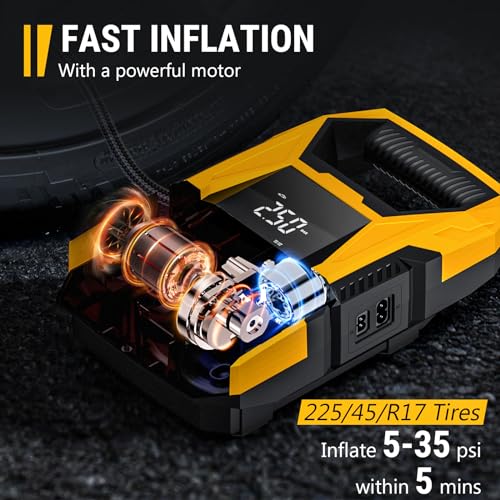
CARSUN AC/DC Tire Inflator Air Compressor

This compact inflator runs on home AC power or your car’s 12V outlet. That dual power is a lifesaver in winter when cold snaps steal pressure overnight. The built-in pressure gauge helps you dial in accurate PSI, so you can match the doorjamb placard even on icy mornings. Auto shutoff means you set your target and let it stop itself.
I like this unit for daily drivers that sit outside. Plug it in at home for a quick top-up before the commute, or throw it in the trunk before a ski trip. It handles car, motorcycle, and bike tires, plus inflatables. If you run snow tires, it’s a steady pick to maintain the best tire pressure for cold weather with minimal fuss.
Pros:
- Dual power: 110V AC at home and 12V DC in the car
- Auto shutoff helps prevent overinflation in the cold
- Clear pressure gauge for easy reading
- Works on cars, motorcycles, bikes, and inflatables
- Portable size with simple controls
Cons:
- Louder than some compact inflators
- Not the fastest choice for large truck tires
- No hard carrying case included
My Recommendation
If you want one inflator that works anywhere, this is it. The AC/DC setup means you can top off at home on freezing mornings or on the road if the TPMS light pops up. It’s a great match if you’re chasing the best tire pressure for cold weather without buying a big shop compressor. Set the target, add 1–2 psi over the placard when a deep freeze hits, and you’re set for safe winter miles.
| Best for | Why |
|---|---|
| Daily commuters | Quick top-ups keep pressure on spec in cold mornings |
| Apartment living | Works on 110V at home; no garage compressor needed |
| Weekend trips | 12V power in-car handles surprise TPMS alerts |
JOES Racing 0-30 PSI Analog Gauge

This analog gauge focuses on the range that matters for passenger cars. The 0–30 psi scale with 1 lb increments helps you set pressure with tight control. The glow-in-the-dark face is easy to read in early morning light. The 2.5-inch dial gives a clean, quick glance read.
In cold weather, accuracy matters more than ever. Air volume shrinks as temps drop, and many dash readings round numbers. I use a good handheld gauge to verify the best tire pressure for cold weather at the valve stem. This JOES Racing gauge has the right range and a simple analog design that just works.
Pros:
- 0–30 psi range suits most car tires for precise reads
- 1 lb increments help dial in winter settings
- Glow-in-the-dark face for pre-dawn checks
- Large, easy-to-read 2.5-inch dial
- Durable, race-inspired build
Cons:
- Not ideal for high-pressure truck or bike tires
- No digital backlight beyond the glow face
- Analog needle can be harder to read with shaky hands
My Recommendation
If you want a simple, durable, and precise gauge for winter checks, pick this. It shines for drivers who value accuracy over extra features. Use it to lock in the best tire pressure for cold weather before work, even in the dark. Pair it with a small inflator, and you’ll fix morning pressure drops in minutes.
| Best for | Why |
|---|---|
| Precision-minded drivers | 1 lb increments for pinpoint pressure control |
| Early risers | Glow face makes dawn checks easier |
| Analog fans | Reliable, battery-free reading in any weather |
JACO FlowPro Digital Inflator 200 PSI
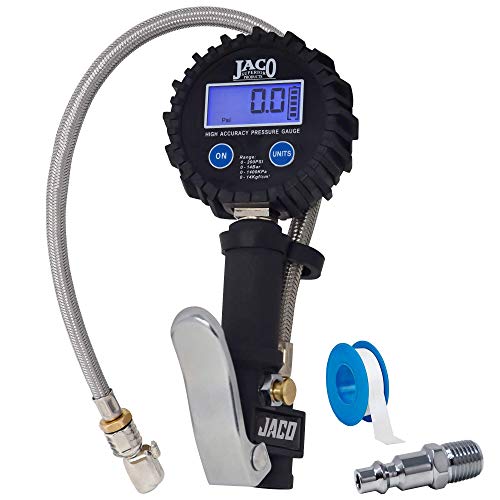
This digital inflator pairs with an air source to fill and measure in one go. The 200 psi capacity gives you wide range for cars, trucks, and more. The digital readout is quick to read in low light, which is handy on dark winter mornings. It’s built to work with standard shop or garage setups.
When temps drop, I like the speed and clarity of a digital inflator. Set your target, add a touch more for a deep freeze, and confirm in seconds. It helps you hit the best tire pressure for cold weather without guesswork. If you maintain multiple vehicles, the higher psi ceiling adds flexibility.
Pros:
- Digital readout is fast and easy to read
- 200 psi ceiling covers cars, SUVs, and light trucks
- Works with standard air sources for quick fills
- Combines filling and measuring to save time
- Great for garages or small shops
Cons:
- Requires an air source; not a stand-alone compressor
- Heavier than simple handheld gauges
- Batteries needed for the display
My Recommendation
Choose this if you have a garage compressor or plan to add one. It’s a time-saver when topping off several cars as temps fall. The clear display makes it easy to nail the best tire pressure for cold weather, then move on. For families with SUVs, it’s a winter-ready tool that pays off fast.
| Best for | Why |
|---|---|
| Home garages | Quick fill-and-check workflow with a compressor |
| Multiple vehicles | High psi range suits cars, crossovers, and trucks |
| Low-light use | Digital screen is easy to read in winter mornings |
JACO FlowPro Inflator 100 PSI
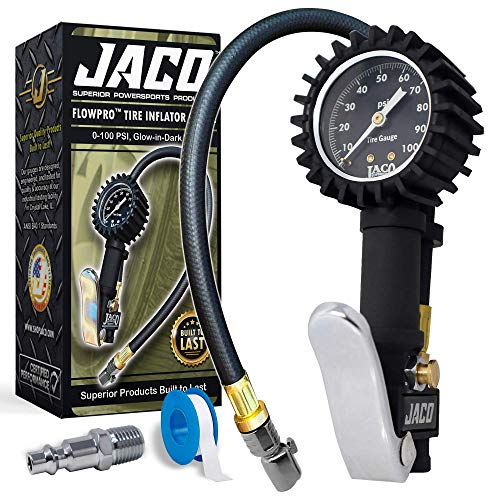
This inflator targets everyday driving needs with a 100 psi scale. It’s built for reliable readings and smooth topping off. The design is simple and sturdy, which matters when your hands are cold. Pair it with a compressor for quick and steady fills.
I like the 100 psi focus for cars and compact SUVs. It gives you a clear picture at the pressures most drivers use. In winter, that means an easy path to the best tire pressure for cold weather without overkill. It’s a practical pick for home garages and first-time buyers.
Pros:
- 100 psi range suits most drivers’ needs
- Solid build for winter durability
- Simple layout keeps you fast and accurate
- Works well with small compressors
- Good value for regular maintenance
Cons:
- Not ideal for heavy-duty truck tires
- No stand-alone power; needs an air source
- Fewer bells and whistles than premium models
My Recommendation
If you want a straightforward inflator for passenger cars, start here. It’s friendly to use and right-sized for daily pressure checks. Hitting the best tire pressure for cold weather becomes a fast chore instead of a pain. It’s also a smart upgrade if you’re moving from a basic pencil gauge.
| Best for | Why |
|---|---|
| First-time owners | Simple to learn and reliable in winter |
| Everyday cars | 100 psi range matches common placard specs |
| Budget-minded buyers | Strong value with practical features |
ETENWOLF Digital Gauge 2-Pack (3-200 PSI)

This 2-pack gives you two digital gauges with wide range and tight accuracy. They’re calibrated to ANSI B40.7 Grade 2A, with ±0.5% precision, which is serious spec for home use. The 3–200 psi range handles cars, trucks, bikes, and more. Each uses replaceable AAA batteries, so you are not stuck when the cold drains a coin cell.
For winter, accuracy and repeatability are key. I keep one in my garage and one in my glove box. That way, I can confirm the best tire pressure for cold weather at home or on a trip. The 2-pack setup is excellent for households with more than one driver.
Pros:
- ANSI Grade 2A calibration with ±0.5% accuracy
- Wide 3–200 psi range covers most uses
- Replaceable AAA batteries for easy upkeep
- Digital readout helps in low light
- 2-pack means one for home and one for the car
Cons:
- Digital units need batteries ready in winter
- Not a fill tool; it measures only
- Can be bulkier than slim stick gauges
My Recommendation
If you value accuracy and want a set-and-forget routine, get this 2-pack. Use one to set each tire to the placard, then add 1–2 psi as temps plunge, and confirm the best tire pressure for cold weather within seconds. This is the most precise way to keep wear even, grip steady, and fuel use low in winter. The extra unit is great for a second car or a teen driver.
| Best for | Why |
|---|---|
| Accuracy hawks | ANSI Grade 2A ±0.5% inspires confidence |
| Households with 2+ cars | Two gauges means coverage at home and on the road |
| Night checks | Digital screen reads clean in low light |
FAQs Of best tire pressure for cold weather
What is the best tire pressure for cold weather?
Use the doorjamb placard as your base. In freezing temps, add 1–2 psi to help offset cold pressure drop and keep stability.
Why does my tire pressure drop in the cold?
Air contracts as temperatures fall. You can lose about 1 psi for every 10°F drop. This is normal and why winter checks matter.
Should I set pressure “hot” or “cold” in winter?
Always set pressure “cold,” before driving. Cold means the car sat for three or more hours and tires match outside air.
Will higher psi in winter reduce traction?
Stay close to the placard. A small 1–2 psi bump helps stability and avoids underinflation. Don’t exceed max sidewall.
Do EVs need different winter pressures?
Follow the EV’s placard. EVs are heavier, so pressure is crucial. Check more often to keep range and grip steady in cold weather.
Final Verdict: Which Should You Buy?
For precise winter checks, the ETENWOLF Digital Gauge 2-Pack stands out. Accuracy, wide range, and two units make it the best pick to lock in the best tire pressure for cold weather fast.
If you also need to fill anywhere, the CARSUN AC/DC Tire Inflator is a smart add-on. Pair both and you’ll set, check, and keep the best tire pressure for cold weather all season.